


The New Digital Imperative in Higher Education
In 2025, universities across the world face an irreversible shift in how learning is delivered, managed, and experienced. Digital learning, hybrid classrooms, and technology-enabled research have become central elements of academic life, reshaping the expectations of students and faculty alike. Institutions that once relied on physical infrastructure as their primary differentiator must now compete on the strength of their digital campus, where seamless connectivity, intelligent automation, and secure, scalable networks determine their academic competitiveness. This shift has placed extraordinary pressure on universities to modernize their campus networks and offer the kind of consistent, high-performance Wi-Fi connectivity that defines today’s learning experience.
The Rise of the Digital Campus as a Strategic Asset
The concept of a digital campus has evolved dramatically over the past decade. What began as an incremental enhancement, adding basic Wi-Fi access or deploying select digital tools has become a foundational strategy for global institutions. A digital campus today is an interconnected ecosystem where physical and digital environments operate in harmony. Students transition fluidly between classrooms, cloud platforms, virtual labs, and interactive learning systems without encountering friction. Faculty rely on digital tools to deliver multimodal instruction, coordinate assessments, and conduct research. Administrators operate on data-driven frameworks for decision-making, resource management, and campus safety. All of this is made possible only when the underlying higher education network solution is modern, intelligent, and built to support constant academic activity.
The importance of the digital campus is now so widely recognized that it influences institutional rankings, global partnerships, and student enrollment decisions. Universities increasingly market their technological sophistication as a marker of their commitment to academic excellence. In a world where students expect the same quality of digital experience on campus as they do in their personal lives, institutions must deliver advanced connectivity and seamless access to digital resources or risk losing relevance.
Digital Learning and the Networking Demands of a New Academic Era
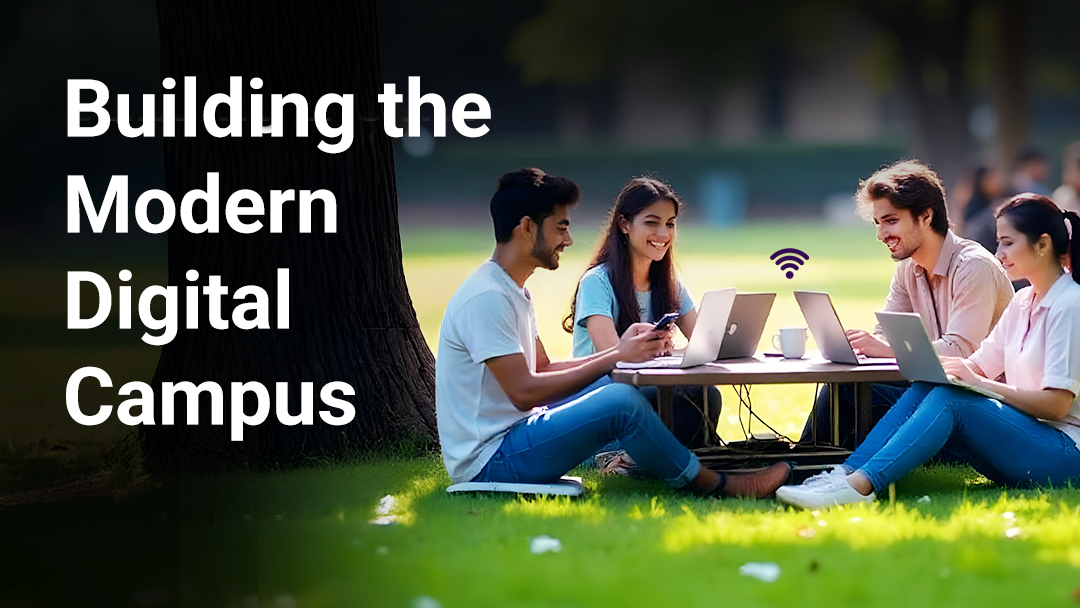
The acceleration of digital learning has placed unprecedented demands on campus infrastructure. Students now rely on bandwidth-intensive content such as collaborative cloud environments, HD and 4K course videos, virtual labs, simulation tools, and AI-driven learning assistants. Classrooms and lecture halls have transformed into high-density digital zones where hundreds of devices may be concurrently connected. Libraries and student hostels have become extensions of the classroom, requiring equal or greater network reliability. Even outdoor spaces across campuses now function as learning zones, intensifying pressure on traditional Wi-Fi deployments.
Legacy networks, designed for limited usage and predictable demand patterns, cannot sustain the scale and unpredictability of modern academic workloads. Congestion, latency spikes, and service interruptions have become common in many institutions, directly impacting learning outcomes. The evolution toward sophisticated education WiFi is no longer discretionary; it is essential to maintain academic continuity. A network that cannot keep pace with digital learning undermines the university’s aspirations to offer world-class education.
The Architecture of a Modern Campus Network
The backbone of the digital campus is a high-performance, resilient network architecture that integrates advanced wireless technologies, intelligent switching, cloud-driven management, and a comprehensive security framework. Next-generation Wi-Fi, particularly Wi-Fi 6 and Wi-Fi 6E, has enabled universities to manage dense device environments with significantly higher throughput, reduced latency, and improved quality of service for a diverse range of applications. These technologies support simultaneous multi-user connectivity, optimize performance in crowded areas, and offer a level of network responsiveness that traditional deployments cannot match.
Beneath the wireless layer lies the switching fabric, which plays an equally critical role. As universities expand across multiple buildings and even multiple campuses, the switching layer must provide high-capacity pathways, seamless traffic prioritization, and the resilience necessary to sustain continuous academic activity. Without a robust switching foundation, even the most advanced wireless deployment struggles to maintain consistent performance.
What truly differentiates modern networks, however, is the shift toward cloud-managed, AI-enabled network operations. Traditional IT models, dependent on manual troubleshooting and reactive maintenance, are increasingly inadequate for campuses supporting tens of thousands of devices. AI-driven management platforms allow IT teams to monitor the entire network estate in real time, identify performance bottlenecks before they affect users, and optimize traffic patterns automatically. This level of visibility and automation transforms network operations from a burden into a strategic enabler.
Security as the Cornerstone of the Secure Digital Campus
While connectivity drives academic innovation, security underpins institutional trust. Universities manage vast volumes of sensitive information ranging from student data and examination records to intellectual property and advanced research outputs. They also host a complex mix of trusted and untrusted devices due to BYOD cultures and public access environments. This diversity makes higher education one of the most challenging sectors from a cybersecurity perspective.
A secure digital campus requires identity-based access, strict segmentation between academic, administrative, guest, and IoT networks, and continuous threat monitoring across wired and wireless assets. AI-driven security has become particularly relevant as threats grow more sophisticated. Automated threat detection and response ensure that vulnerabilities are addressed immediately, protecting the institution from disruptions that could compromise academic operations or reputation.
How the Digital Campus Shapes Student Experience and Institutional Competitiveness
As global higher education becomes increasingly competitive, digital capability has emerged as a defining factor in student decision-making. Students evaluate universities not only by academic reputation, but also by the quality of the learning environment, and that environment is now primarily digital. Institutions offering reliable Wi-Fi connectivity, robust campus networks, and seamless access to learning systems project a sense of modernity and preparedness that resonates strongly with today’s learners.
The impact extends beyond student engagement. Faculty efficiency improves when technology works seamlessly. Administrative processes become smoother and more transparent. Research collaborations accelerate when digital infrastructure supports high data throughput, international connectivity, and secure sharing environments. Even sustainability initiatives benefit from IoT-enabled campus systems that optimize energy usage and streamline resource management, all of which depend on a stable, intelligent network foundation.
Global Forces Accelerating the Transition to Digital Campuses
Several global trends are pushing institutions toward the digital campus model. Hybrid teaching has become a permanent fixture, requiring networks that support seamless switching between in-person and remote learning. Cloud adoption continues to grow as universities rely on SaaS platforms for everything from learning management systems to administrative tools. IoT deployments have expanded dramatically, powering smart classrooms, environmental monitoring, automated attendance systems, and campus safety solutions. Research ecosystems increasingly require high-bandwidth, low-latency networks capable of supporting advanced analytics, AI experiments, and global data exchange. Together, these forces make the modernization of campus networks not only relevant but unavoidable.
HFCL’s Role in Enabling the Next Generation of Digital Campuses
HFCL is committed to enabling global universities as they navigate this transformation. The company’s portfolio of high-performance Wi-Fi access points, enterprise-grade switches, AI-driven network management platforms, and comprehensive security layers is designed specifically for the complexity and scale of educational institutions. HFCL’s education network solution emphasizes reliability, visibility, and intelligent control, ensuring that universities can deliver consistently high-quality learning experiences across their entire campus footprint. More importantly, HFCL’s solutions are engineered for scalability and long-term evolution, allowing institutions to expand their digital capabilities without disruptions.
Conclusion: The Digital Campus as the Infrastructure of the Future
As higher education continues to evolve, the digital campus has emerged as the essential infrastructure supporting academic innovation, global competitiveness, and student success. Institutions that invest in advanced higher education network solutions, intelligent campus networks, and secure digital ecosystems will shape the future of learning. Those that delay risk falling behind both technologically and academically. In this new era, the network is no longer an enabler of education, it is the environment in which education happens. HFCL is committed to helping institutions build this environment with the performance, intelligence, and security that the future demands.





.svg)